


As Canadian businesses embrace remote work, mobile teams, and cloud-based communications, call masking has become a critical VoIP capability; not just for convenience, but for privacy, regulatory compliance, and brand trust.
This guide explains what call masking is, how it works in VoIP systems, when it is legal in Canada, and why Canadian businesses increasingly rely on it in 2026.
What Is Call Masking?
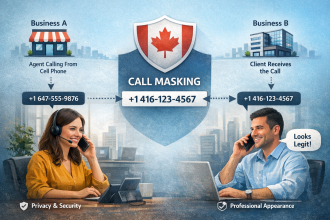
Call masking is a VoIP feature that allows a business to display a trusted business phone number or virtual number instead of an employee’s personal phone number on outbound calls or texts.
From the recipient’s perspective:
- They see a recognizable company number
- They never see the caller’s personal mobile number
- Return calls are routed through the business phone system
Internally:
- Calls are logged
- Privacy is preserved
- Communication remains professional and auditable
Call masking is widely used in sales, logistics, healthcare, field services, real estate, and customer support.
How Call Masking Works in Modern VoIP Systems
In a Canadian VoIP environment, call masking typically works as follows:
- Outbound call is initiated from a mobile app, softphone, or browser
- The VoIP platform replaces the caller ID with a company-owned number
- The call is authenticated and delivered using compliant signaling
- Return calls are routed back to the business—not the employee’s device
Unlike basic caller ID blocking, call masking displays a legitimate, reachable number, which improves answer rates and trust.
Call Masking vs Caller ID Spoofing: Understanding the Legal Difference
This distinction is critical in Canada.
Legal Use (Call Masking)
The CRTC explicitly recognizes legitimate caller ID alteration, including:
- Call centres calling on behalf of clients
- Doctors showing a clinic number instead of a personal cell
- Businesses using a main number for outbound calls
These uses are lawful when the caller accurately identifies themselves and does not mislead the recipient.
Illegal Use (Caller ID Spoofing)
Caller ID spoofing becomes illegal when:
- The displayed number is false, misleading, or deceptive
- The intent is fraud, misrepresentation, or harm
Violations of the Unsolicited Telecommunications Rules can result in fines up to $15,000 per violation for corporations.
Key takeaway: Call masking is legal in Canada when used transparently and honestly.
Why Call Masking Matters for Canadian Businesses in 2026
1. Employee Privacy Protection
PIPEDA requires organizations to safeguard personal information—including employee contact details—when used in commercial activity.
Call masking prevents:
- Post‑call contact outside business hours
- Data leakage from CRM-to-mobile workflows
- Employee exposure to harassment or retaliation
2. Higher Answer Rates and Customer Trust
Canadian consumers increasingly ignore:
- Unknown numbers
- “Private” or “Blocked” caller IDs
- Suspected scam calls
Using a recognizable local or toll‑free business number dramatically improves pickup rates while remaining compliant with CRTC accuracy requirements.
3. Compliance with Canadian Telecom Regulations
Call masking supports compliance with:
- CRTC identification requirements for telemarketing
- CASL technology‑neutral outreach rules
- PIPEDA privacy safeguards for personal data
CASL explicitly applies to VoIP and modern telecommunications technologies.
Common Canadian Use Cases for Call Masking
Field Sales & Remote Teams
Sales reps can call prospects from:
- Their mobile phone
- A laptop softphone
- A browser
…while always displaying a corporate number.
Real Estate & Property Management
Agents working evenings and weekends can:
- Protect personal phone numbers
- Route inquiries to brokerages
- Maintain call history and compliance
Healthcare & Clinics
Clinicians may display a clinic number rather than a personal device, which is recognized by the CRTC as a legitimate use of caller ID alteration.
Delivery & Logistics
Temporary, proxy-style call masking prevents direct exchange of customer and driver numbers—reducing risk and improving accountability.
STIR/SHAKEN and Call Masking in Canada
Canada has implemented caller ID authentication (STIR/SHAKEN) to combat scam calls, requiring carriers to validate the legitimacy of caller ID information.
Important clarification:
- Properly configured call masking does not break STIR/SHAKEN
- The displayed number must be owned, assigned, and authenticated
- VoIP providers must align identity headers correctly
Legitimate masking works with, not against, Canada’s anti‑spoofing framework.
Is Call Masking Legal in Canada?
Yes, when done correctly.
Call masking is legal if:
- The business accurately identifies itself
- The displayed number is valid and reachable
- There is no misleading or fraudulent intent
It becomes illegal when used to deceive, impersonate, or hide identity in violation of CRTC rules.
Choosing a Call Masking‑Ready VoIP Provider in Canada
When evaluating a provider like VoIP Much, Canadian businesses should ensure:
- Canadian DID ownership and routing
- STIR/SHAKEN compatibility
- Local number support across provinces
- Compliance alignment with CRTC, CASL, and PIPEDA
- Mobile + desktop call masking support
- Clear audit logs and call history
Final Thoughts: Call Masking Is Now a Business Standard
In 2026, call masking is no longer a “nice‑to‑have.”
For Canadian businesses, it’s a privacy safeguard, compliance tool, and trust‑builder.
When implemented properly, call masking:
- Protects employees
- Increases customer engagement
- Aligns with Canadian law
- Supports modern, flexible work